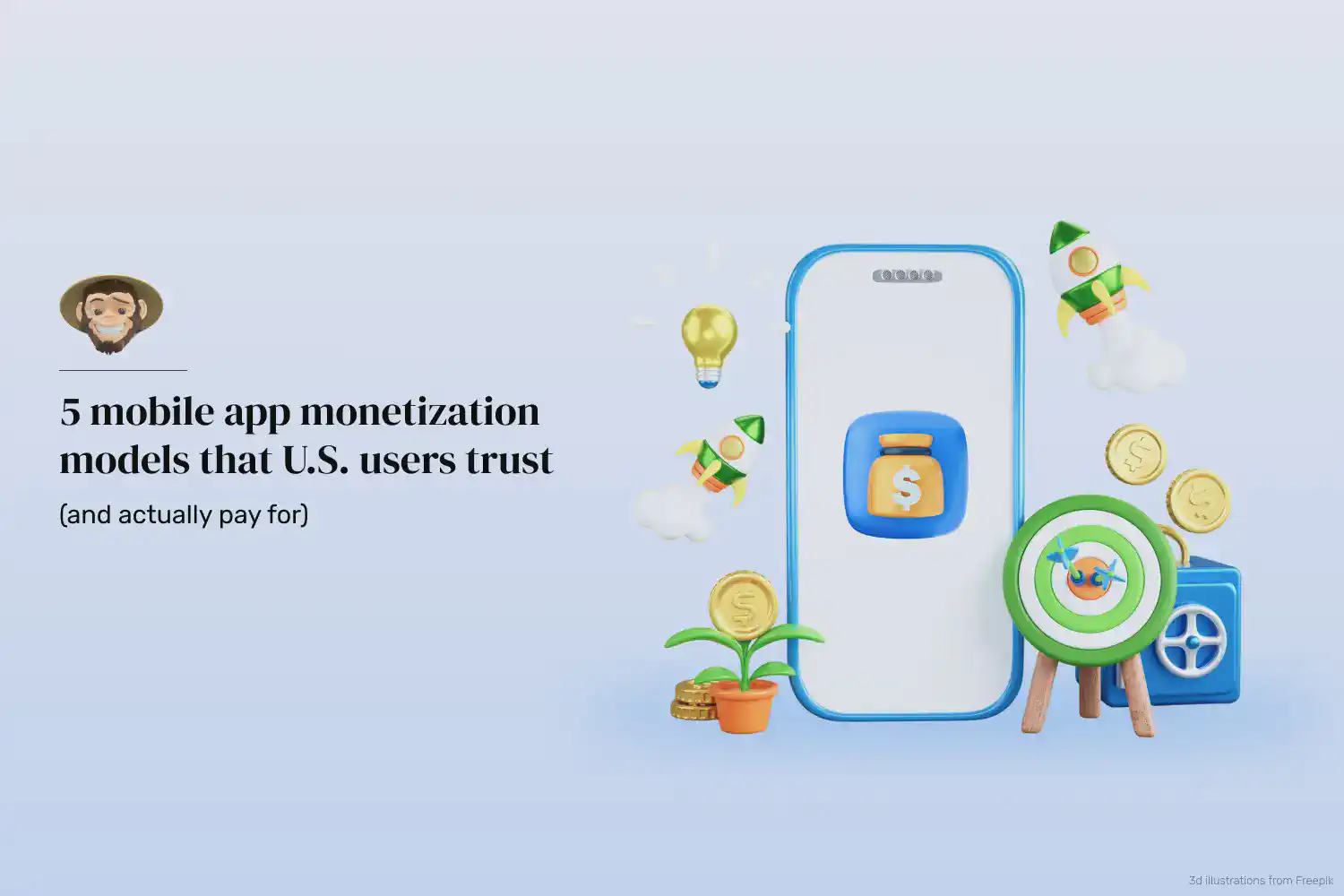
In a crowded mobile app marketplace, choosing the right monetization model isn’t just about generating an efficient revenue stream—it’s about building user trust.
In today’s increasingly competitive mobile app marketplace, selecting the right monetization model is no longer just about generating revenue; it’s about building user trust. U.S. users in 2025 have become much more demanding, discerning, and selective about where and how they spend money in mobile apps. They are better informed, and their decisions are driven by heightened awareness of privacy and transparency, value, and by a search for the best possible user experience. The good news for mobile app developers is that when an app delivers clear value and credibility, users are willing to pay, whether through a subscription (which generated $45.6 billion in 2023), a one-time purchase, or premium upgrades. These strategies are often shaped by user feedback, and when users recognize that their input is valued, they won’t hesitate to spend money on a mobile app.
In this article, we at Foonkie Monkey will explore the mobile app monetization models that resonate most with U.S. audiences in 2025. We’ll unpack why they work and share actionable insights to help you implement them strategically for long-term success.
Top mobile app monetization models U.S. users pay for

1. Freemium model
The freemium mobile app model, with its free basic version and the option to unlock additional content through in-app purchases or subscriptions, is a versatile and empowering tool for app developers. It allows users to experience the app’s value without financial risk, making it one of the most effective and trusted monetization strategies for U.S. mobile apps. The fact that approximately 95% of U.S. mobile apps are free to download underscores the dominance of the freemium model as the baseline.
Best practices to implement it
- Create a very generous, fully functional free tier that showcases your mobile app’s value but leaves room for upselling.
- Prompt users for upgrades based on milestones, usage time, or feature limits.
- Offer flexible pricing with multiple options, such as monthly, annual, or lifetime, to match diverse user budgets and needs.
- Transparency is key in the freemium model. Highlighting exactly what users gain by upgrading not only informs them but also instills confidence in your app’s value proposition.

2. In-app purchases (IAPs)
In-app purchases, which reached a market size of $209.13 billion in 2024, allow users of ‘freemium’ apps, which are free to download but offer additional features or content for a fee, to pay for what adds value to their experiences. This could mean paying for a subscription, unlocking a new feature, purchasing an ad-free version of an app, or buying virtual goods. IAPs are a great monetization model for mobile apps in the United States because they offer incremental upgrades tailored to engagement and user behavior. Moreover, since in-app purchases let your users enjoy your mobile app’s core features for free while paying only for enhancements, you can better retain users.
Best practices to implement it
- Release prompts for purchasable offers at moments of high user engagement, such as after completing a level or unlocking a milestone. Make sure they’re not intrusive and are well-timed.
- Offer in-app purchases in a variety of forms, both consumable and non-consumable, such as tokens, power-ups, lifetime access, and feature unlocks. This flexibility allows you to cater to different user preferences and behaviors.
- Explain to users exactly what they get with each purchase. This transparency not only avoids surprise charges but also builds trust with your users, making them more likely to make future purchases.
- Ensure the purchase process is seamless and integrated into the app’s design, not a complex external process.

3. Subscription and membership model
A subscription-based monetization model is very efficient because it aligns revenue with ongoing value. Instead of asking users for a one-time transaction, such as paying to download the app, users build a relationship with your app by paying monthly or annually for continued access, exclusive content, or advanced functionality. App subscriptions generated $45.6 billion in 2023, proving that subscriptions and memberships represent convenience and trust. Users have the power to cancel anytime, giving them a sense of control that increases satisfaction and retention.
Best practices to implement it
- Ensure the sign-up and subscription processes are as frictionless and straightforward as possible to avoid pain points.
- Use freemium models and free trials to allow users to experience the app’s benefits before asking them to purchase a subscription.
- When promoting your subscription, focus on the benefits it brings rather than just its features. Highlight the outcomes users can achieve, such as ‘save time’ or ’learn faster’, to make the value proposition clear and compelling.
- Offer users different subscription options, such as monthly, quarterly, and annual plans, to cater to different budgets and purchase intents.

4. Transaction fees
Transaction-based monetization is very effective and primarily used by platforms that facilitate transactions between two or more parties, such as FinTech, marketplace, and service-based mobile apps in the U.S. Rather than charging users up front to download the app or use premium services, startups earn a percentage or fixed fee on every completed transaction within the app. As a result, you align your revenue directly with user activity, which increases with transaction volume.
Best practices to implement it
- Offer clear value to your users. They will only pay transaction fees if your mobile app gives them something that justifies the extra cost.
- Transparency with fees is non-negotiable. Always disclose all transaction charges clearly before confirmation. Hidden fees can erode trust, so it’s crucial to make users feel secure and trustful of the model.
- Ensure a seamless user experience by making the payment process intuitive, fast, and, more importantly, secure. A confusing checkout flow increases the rate of abandoned transactions.
- Integrate secure compliant payment rails such as ACH, RTP, or Zelle to increase trust and security.

5. Affiliate integrations
Affiliate integrations, often overlooked yet highly effective, are a user-centric monetization strategy. They enable mobile apps to connect users with trusted third-party products or services, earning a commission for each successful signup or transaction. This model, while resembling advertising, is more valuable as it respects users’ preferences, offering only relevant and valuable products. In fact, 65% of U.S users express a preference for in-app recommendations over web-based suggestions.
Best practices to implement it
- Only partner up with brands that align with your users’ needs and values. Avoid bombarding them with random ads and pushing products that don’t match their interests.
- Integrate affiliate links and promotions contextually and naturally into your mobile app’s user flow, and ensure native ads match its design to avoid disrupting the experience.
- Use analytics to track engagement and refine partnerships based on what your users actually respond to.
- Focus on quality over quantity and seek long-term partnerships over one-off promotions to build sustained trust.

Final thoughts
Implementing a successful mobile app monetization model doesn’t mean finding the best way to squeeze money from your users. At its core, an effective, sustainable monetization model involves adding value, gaining trust, and ensuring transparency in every transaction, click, or swipe. And in 2025, when U.S. app users expect experiences that feel fair, frictionless, and genuinely rewarding, the most innovative, successful, and profitable apps are those that prioritize long-term relationships over short-term gains. Whether that means implementing a freemium model, a subscription plan, or in-app purchases, choose a model that aligns with your app’s purpose and your audience’s expectations. By understanding and strategically implementing these models, you can take control of your app’s success and empower yourself in the competitive mobile app marketplace.
At Foonkie Monkey, we’ve helped U.S. startups build, scale, and monetize apps that users love and actually pay for. If you’re ready to turn your idea into a high-performing, revenue-generating mobile experience, let’s talk. Our team can help you design a monetization strategy that drives growth while keeping your users at the heart of every decision.